Noah born, 1819
Noah was born on 30 June 1819, in Jackson, Tennessee, United States. His mother was Sarah Gordon and was 28 years old when Noah was born. His father was Thomas Guymon and was 32 years old at the time. Noah was the sixth of 13 children. His older siblings, Isaiah, John, William, James, and James, were 9, 8, 4, 3, and 3 years old when he was born.
Brother Noah born, 1819
Noah's brother, Noah, was born the same year.
Tennessee, 1819
A large state, Tennessee is covered in rolling hills, flat lands, and rivers. During the 1800s, many immigrants from Europe and other places relocated to Tennessee in search of religious and economic freedom. After serving in the Revolutionary War, many veterans were awarded lands grants in Tennessee and moved there to make their livings. The Mississippi River to the west facilitated trade and fishing during this time. Around 1 million Americans living in Tennessee during the 1800s; communities like Noah's mainly consisted of farmers, plantation owners, and their slaves.
Industrial Revolution, 1760 - 1830

Steam Engine
Cotton Mills
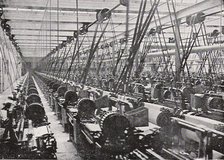
60 years before Noah was born, the Industrial Revolution began to take Europe and North America by storm. Countless technological advancements were developed, including the steam engine and the cotton mill. The efficiency of the steam engine, along with newly-dug canals, lowered the cost of trade goods and transportation and facilitated commerce and travel between Noah's country and the rest of the world. While the Industrial Revolution brought many new inventions to light and allowed the world to progress industrially, it also created negative consequences such as massive job loss due to industrialization, pollution from factories, and increased urban poverty.
Panic of 1819, 1819
When Noah was 0, he lived through the first major peacetime financial crisis in the United States. After the War of 1812 and the economic bubble that followed, a deep depression hit the United States. Since swelling crop yields in Europe caused imported food to be cheaper than home-grown food priced at and purchased with inflated currency, people were forced off their farms and out of their homes due to bank failures and foreclosures. During Noah's life, prisons became overcrowded with debtors who were locked up after failing to pay their bills.
Missouri Compromise, 1820
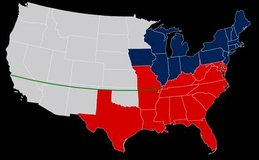
In 1820, when Noah was 0, the Missouri Compromise was passed by the United States Congress. By this point, slavery had become a very divisive issue, as representatives of the North looked to prevent pro-slavery regions from gaining statehood, while many Southerners sought to expand the slave trade further west. In this agreement, Missouri was granted statehood with slavery declared legal within its borders. But as a trade-off, Maine joined the Union as a free state, and slavery was forbidden in all other land north of the 36°30' parallel. In the short term, the compromise was honored. But few people on either side were pleased, as the moral objections to slavery grew louder in the North, while some Southern farmers felt cut off from opportunities in the Northwest.
Childbirth
Because of great limitations in medical care, Noah's mother faced considerable risks and challenges throughout her pregnancy and while giving birth. The majority of mothers gave birth in their homes, often with the help of female family members or a midwife if they could afford one. Physicians were only called if problems such as infections arose. However, during this time, midwives and physicians, alike, were often inexperienced or not properly trained.
The average Tennessee woman gave birth to about three to seven children over her lifetime, but generally only half of these children would survive until the age of five. Death rates were also high among women of childbearing age. Many of the mothers in Noah's community died giving birth because of infections spread by unclean hands and birthing instruments. Enslaved African-American mothers often had to give birth on their own, though some were provided a midwife. Slaves were often encouraged to have children by plantation owners who saw slave children as a good investment.
Brother Martin born, 1821
Noah's brother, Martin, was born when Noah was 1 years old.
Sister Barzilla born, 1823
Noah's sister, Barzilla, was born when Noah was 4 years old.
Childhood
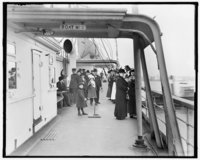
Children playing quoits
During Noah's childhood, the emphasis was placed on contributing to the economics of the family. For many, education was considered a luxury. Tennesseans often expected children to start helping around the home as early as age three by taking care of their younger siblings. Children of all ages were expected to complete chores, and the work was often divided by gender roles, with girls learning basic cooking and cleaning skills while boys learned various farming skills. The gap between middle-class and poor children continued to grow during this period in Tennessee, as more middle-class children received an education while others remained on the farm or at home helping their parents.
While children in Tennessee were often expected to work hard, they occasionally had time to play popular games such as tag or blind man's bluff. Boys would often throw horseshoes, shoot marbles, or play with wooden spinning tops. Many girls enjoyed playing with dolls made out of cornhusks, cloth, or a combination of a cloth body and a ceramic head purchased from the store. Children also enjoyed playing with toys such as jacks and quoits (ring-toss), among others. During this era, toys began to be mass-produced for the first time, giving kids from different communities a similar pool of entertainment options to choose from.
Education
Noah had more options for education than the generation that had come before him, as Illinois moved from a small collection of privately-run religious schools to a wider spectrum of institutions from the elementary to collegiate level. In the rural parts of the state, humble one-room schoolhouses were still common, with one teacher for all grades. Children in more densely populated areas, however, could eventually attend new, large-scale school buildings with greater access to books and other learning materials. The Illinois General Assembly created the modern, free public school system in 1855, and more options for higher education were founded around the same time, including Northwestern University in Evanston in 1851, and the University of Illinois at Urbana-Champaign in 1867. For all the progress, however, boys were still encouraged to attend school more than girls, and African-Americans and other minority groups were still legally segregated and unable to access the same resources.
Sister Elizabeth born, 1826
Noah's sister, Elizabeth, was born when Noah was 7 years old.
Illinois, 1826
During the 1800s, many European immigrants came to Illinois in search of religious and economic freedom. This influx, combined with the westward movement of Americans citizens, caused the overall population of Illinois to rise from just 7,500 in 1800 to more than 600,000 in 1850. Illinois' flat terrain and fertile lands made it possible for agriculture to thrive and become a staple of the economy. Living in Illinois at this time, Noah would have lived and worked around many farmers, ranchers, and fishermen.
Sister Sarah born, 1829
Noah's sister, Sarah, was born when Noah was 10 years old.
Sister Polly born, 1829
Noah's sister, Polly, was born when Noah was 10 years old.
Sister Sarah dies, 1829
Noah's sister Sarah Jane Guymon passed away in Paris, Edgar, Illinois, United States at the age of 0. Noah was 10.
Second Great Awakening, 1830
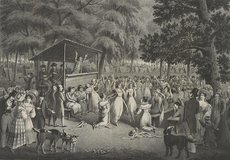
A camp meeting during the Second Great Awakening
When Noah was a child, he lived through the Second Great Awakening, a Protestant revival movement of the early 1800s. Prompted by deteriorating religious excitement and lack of faithful devotion in the United States, numerous preachers traveled the country and gave lectures to crowds assembled in large camp meetings in an attempt to overcome the religious indifference and skepticism of many Americans. This new-found religious fervor produced thousands of new members in existing churches and also formed the foundation of new denominations such as The Church of Jesus Christ of Latter-day Saints (Mormonism). The abundance of religious options opened alternative spiritual doors for Noah and his community.
Oregon Trail, 1830

Wagon ruts along the Oregon Trail
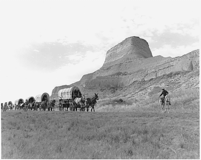
The Oregon Trail guided numerous people west to the Oregon territory starting in the early 1800s, with a steady increase in traffic when Noah was a child. At first, only trappers and traders passed through the trail on horse or by foot, but by 1836 settlers organized the first wagon train and crossed the trail. Until the completion of the Transcontinental Railroad in 1869, pioneers used the Oregon Trail as their main means of transportation into the territory, typically to the Willamette Valley in the western half of Oregon. Seasoned travelers shared stories of the trail's demanding nature and disheartening trials with prospective migrants.
Elizabeth Ann Jones born, 1830
Noah's future wife, Elizabeth Ann Jones, was born 10 years after Noah. Elizabeth was born in Pennsville, Morgan, Ohio, United States.
Hygiene
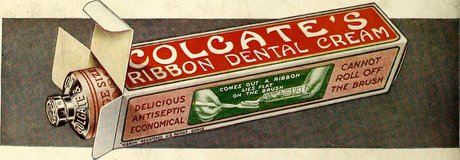
Colgate toothpaste, first sold in 1873
Illinois still wasn't that far removed from its frontier past by the 19th century, so good hygiene and health practices were uncommon. The use of contaminated water throughout much of the 1800s led to terrible outbreaks of cholera in the towns of Carrollton, Quincy, Galena, and Chicago. Continued outbreaks of disease eventually inspired the establishment of the state's first chartered hospital, Mercy Hospital, which opened in Chicago in 1852. Shortly thereafter, more advanced plumbing began appearing in new homes across the Midwest, although people in rural areas still relied on outhouses during much of this period.
Noah's friends and neighbors used soap made from animal fat and wood ashes to bathe, as well as to wash clothes and clean the house. More frequent bathing, coupled with flower petals used as deodorants, drastically reduced the stench of heavily-trafficked streets. Some Illinoisans also began to brush their teeth for the first time, and companies soon created a competitive, growing market for dental hygiene products by manufacturing and selling toothbrushes and toothpaste. For feminine hygiene, women continued using cotton cloths until manufactured cloth pads became available in the mid-1800s. In the 19th century, doctors started recommending that mothers change infant's diapers more frequently and replace potentially rash-causing old cloths. By the latter part of the century, mass-produced cloth diapers became more readily available, though parents often still were forced to use burnt flour to relieve the common problem of diaper rash.
Black Hawk War, 1832
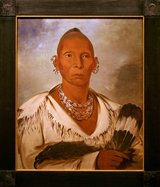
Oil painting of the Sauk leader Black Hawk
Though many original native tribes of the old Illinois Territory had already ceded their lands to the U.S. government and departed, major skirmishes continued during Noah's time in the region. In the spring of 1832, Black Hawk, a respected leader of the Sauk tribe, ventured back into Illinois, hoping to resettle on land his people had lost in the ill-fated Treaty of St. Louis decades earlier. His arrival, with a group of Sauk, Kickapoo, and Meskwaki Indians at his side, was quickly met with aggression by American military forces. In response, Black Hawk led a wave of raids on U.S. outposts through Illinois and southern Wisconsin. A series of battles carried on throughout the summer, keeping locals like Noah on their toes. By August 2, with Black Hawk's band on its final legs, a U.S. attack at the Battle of Bad Axe (near present-day Victory, WI) finally destroyed the uprising, prompting Black Hawk to surrender shortly afterwards. Some U.S. officials would use the Black Hawk War as fuel to promote a policy of total, forceful Indian removal from the American West.
Settlement of Iowa, 1833 - 1860
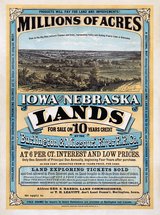
Leaflet advertising land for settlement in Iowa
Despite the acquisition of Iowa in the Louisiana Purchase in 1833, Iowa Territory generally was not available to settle until after 1833, due to the Black Hawk War. Once this concluded, pioneers explored the present location of Iowa City and settled with their families. Over the following years, the population of Iowa doubled annually, largely due to the huge amount of advertising in the press about the new land and the quality of the soil – over one quarter of all fertile soil in the United States was in Iowa Territory. Treaties with the Sac and Fox tribes opened up even more settlement in 1837 and 1842 for white settlers. As a term of one of these treaties, the tribes had until May 1843 to leave the area of the remaining portion of the state where they lived. Prior to this date, Army officers ensured potential white settlers did not “jump the line” earlier to mark claims. On April 30, 1843, Noah's future Iowan neighbors waited along the border between the occupied land and the new territory to be released. At midnight, the federal government gave the signal in the form of gunshots, and the land formally opened for settlers. Thousands poured into the new area and staked claims, surveyed, and purchased lots.
Sister Melissa born, 1833
Noah's sister, Melissa, was born when Noah was 13 years old.
Clothing
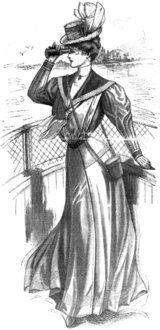
An example of Victorian fashion for women
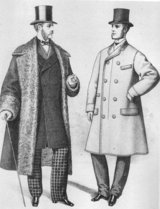
Fashion trends in the United States went through many variations during Noah's life, but there were some consistencies that spanned economic classes, with both frontier men and wealthy urban businessmen often favoring a formal look, with long wool frock coats and trousers, vests, large bow ties, and sturdy leather boots. Women on a wagon train might wear a long, one-piece cotton or wool dress in a flower print or plaid pattern, with a bonnet, an apron, and/or a shawl as accessories. Victorian styles influenced American women, too, with many sporting elaborate, frilled ankle-length skirts, camisoles, petticoats, form fitting jackets, and highly restrictive corsets. Hats were worn by most of the men Noah knew, be it a Lincoln style silk top hat, a simple straw cap, or a western cowboy hat. Long beards and mustaches, well coiffed, were also common.
Religion
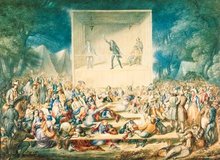
Methodist camp meeting, 1839
Religion played a large role in local and national governments throughout Noah's lifetime. Almost 70% of religious Americans in the 19th century identified with some Christian denomination, including Catholicism, Methodism, Lutheranism, and the Baptist Church. Increased immigration brought other religions such as Judaism, Islam, and Buddhism, promoting greater religious diversity—although the relationships between these groups were not always cordial. In the 1840s, Irish and German Catholic immigrants met with some persecution from other Americans, who feared that Catholicism would erode Protestant American values. Some Protestant denominations themselves began to split into northern and southern factions as the struggle between the North and South grew more bitter over the issue of slavery. Northern abolitionists in particular used Protestant Christian imagery and language to help sway others to their cause.
Many of Noah's Christian neighbors attended religious services regularly and grew close to their church community. Although the United States Constitution forbid the national government from establishing a national church, states were not faced with the same restriction. Many New England states maintained a special relationship with the Congregationalist Church during this era. However, pressure from other faiths caused many of these state governments to gradually stop favoring a particular church.
Noah's community also heard news of Baptist and Methodist preachers making their way across America and converting followers. These preachers of the Second Great Awakening railed against the sinfulness of humanity, beseeching their audiences to give up their wicked ways and convert. As a result, both the Methodist and Baptist Churches gained a large number of converts, becoming two of the largest Protestant groups in the nation. By the 1830s, the Mormon Church was drawing converts, as well, but began to suffer persecution from their neighbors. Meanwhile, in New England, intellectual circles began to adopt Unitarian ideas. This new movement, although smaller than the others sweeping through Noah's community, was influential at the national level.
Brother Martin dies, 1836
Noah's brother Martin Guymon passed away in Hancock, Illinois, United States at the age of 15. Noah was 17.
John Deere Plow, 1837
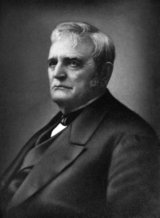
Portrait of John Deere
Illinois was still an almost entirely agricultural state when Noah was a teenager, and one new invention was about to revolutionize how hundreds of farmers conducted their work. In 1837 John Deere, a blacksmith in the town of Grand Detour, Illinois, introduced the first model of his self-scouring steel plow—a design that prevented thick soil from sticking to the equipment as it did with wood or cast-iron. Within a decade, Deere's steel plow had become a sensation, speeding up agricultural production and launching one of the most successful companies in the farming industry.
Marriage
As America expanded west and became more of a melting pot back east, views of marriage slowly evolved. Rather than having marriages arranged or negotiated ahead of time, love became the guiding principle for most relationships in Noah's community. During the Colonial days, Puritans had largely left marriage as a civic matter rather than a religious one, but as people brought their faiths to the States throughout the 19th century, the types of religious wedding ceremonies practiced in the country became more and more varied. Women were also having greater say in marriages, thanks in part to the added responsibility cast upon them during several wars. In cases of divorce, a woman could now claim custody of her children. With more people settling in smaller homes in cities, couples also had fewer children on average. Society still viewed traditional family roles as the mother raising the children and keeping a good home while the father worked and provided food. Women's rights advocates, however, were beginning to fight against this simplified view.
Trail of Tears, 1838
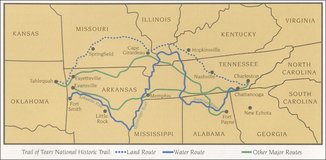
A Map of the Trail of Tears
18 year-old Noah lived through one of the most tragic events in United States history: the Trail of Tears. After years of tense coexistence with Native Americans, then-president Andrew Jackson passed the Indian Removal Act, forcefully evicting all tribes east of the Mississippi River. Around 1/3 of the Cherokees, Muscogees, Choctaws, Chickasaws, and Seminoles that were forced to move died on the 1,200 mile-long winter trail. Those that survived were forced to live in hostile reservations around modern-day Oklahoma and Arkansas, far from the lands that had been their home for hundreds of years.
Diet

Cornbread
It's no coincidence that Americans started eating better and expanding their palates at the same time that technology was improving transportation and hygiene. While Noah knew many people who still relied on subsistence farming, those same farmers could also now sell and ship their food to cities far and wide. Some popular new foods, like Rocky Mountain oysters, stayed regional. Others, like peanut butter, corn bread, fried chicken, and flavored soda water, slowly spread across the country, sold at local groceries and restaurants. Food purchased at a store could then be taken home and prepared safely using an open hearth or cast-iron gas stove.
Springfield as Capital, 1839
Early in Illinois' history, the towns of Kaskaskia and Vandalla had served as the state capital, but in 1839, a permanent location was finally established in Springfield, located toward the center of the state in Sangamon County. The Illinois General Assembly had arrived at this decision largely through the convincing arguments of a group of Sangamon County representatives known as the "Long Nine," as they were each over six feet tall. Noah might not have recognized the name at the time, but one of those nine men was a young lawyer named Abraham Lincoln.
Military

A common musket during the Civil War
During the 1800s the US was involved in several military conflicts, including the War of 1812 and the Civil War. The Civil War was the first time that the United States used a draft to obtain soldiers. Of the 2,100,000 Union soldiers, 2% were draftees, 6% were substitutes paid by draftees, and the rest were volunteers. Union privates were paid 13 dollars per month, while officers were paid anywhere from 50 to 700 dollars per month, which varied depending on the officer's rank. Members of the Southern military were paid similar to Union soldiers.
When men weren't at war, the women around Noah were expected to devote their lives to cleaning up after and nurturing their husband and children. During the Civil War, however, their role changed. Women signed up to work as nurses and joined volunteer brigades. Women also served on the front lines by cooking and cleaning up for the soldiers, and their efforts helped to make conditions on the front lines more sanitary. Women in Noah's community acted as everything from nurses to spies, and maintained the home front in the absence of the men. While women were not allowed to enlist, some disguised themselves as men and fought and died in the Civil War.
Improved Transatlantic Mail, 1840
On July 17, 1840, when Noah was 21, a 63 meter-long wooden steamship arrived in Halifax, Canada just 12 short days after leaving Liverpool, England. Its arrival in Boston only a few days later proved that steamships could make the Liverpool-Halifax-Boston mail route in only 14 days and 8 hours, much faster than a sailing ship. The use of steamships along the route allowed correspondence from people in Noah's community to be delivered faster than ever before.
Medicine
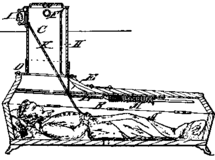
A coffin bell, used to notify the living if a corpse regained consciousness
Noah lived during a time of great medical progress, as increased understanding of human anatomy was helping doctors and scientists come up with better solutions for many of the diseases, infections, and unsanitary conditions plaguing American life. The stethoscope was invented around this time, along with blood transfusions, cholera vaccines, laughing gas, and a number of new anesthetics. Those of Noah's friends that lived in or near large towns or cities benefited much sooner from these advances than those that lived in more rural areas.
As a further issue, only a handful of medical colleges and hospitals existed in the United States during Noah's life, and high infant mortality rates— along with often devastating outbreaks of chicken pox, measles, mumps, and whooping cough— kept the average lifespan barely above 40. Death, to put it bluntly, was a very common part of life.
In another morbid part of 19th century life, some of Noah's deceased friends or family may have actually been buried with a shovel or pickaxe in their coffin. Why? Because with many doctors still not able to diagnose whether a patient was in a coma, relatives wanted to be sure the dearly departed had a fighting chance just in case he woke up after his funeral!
Telegraph, 1844
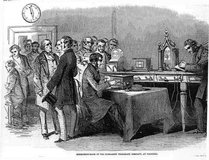
A telegraph message being received
"What hath God wrought!" With these words, sent over the newly constructed telegraph line that linked Washington DC to Baltimore, Samuel Morse instigated a revolution in communication in the United States. The fateful message was sent on the 24th of May, 1844, when Noah was 24.
The Washington-Baltimore line was the first long distance telegraph line in the United States. Morse was one of several men who had recently invented telegraph machines, which sent short static bursts over electrical lines to be received on the other end of the wire as clicking sounds. He also helped invent a code where each letter in the alphabet was represented by short or long electrical clicks, allowing words to be transmitted quickly.
With the success of the Baltimore-Washington line, soon telegraph lines were connecting cities and communities across the country. St. Louis was connected to the East Coast in 1847, and the West Coast received its first connection to the East Coast in 1861. These developments allowed for messages to be sent across the nation, helping Noah's community stay in contact with friends and family members, as well as aiding businesses and government enterprises. No such immediate forms of long-distance communication had ever been achieved before, and many people in Noah's time were in awe of the technology.
Entertainment
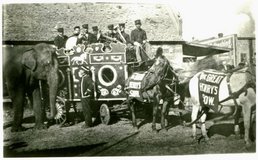
A circus wagon
The early 1800s did not offer a great deal of leisure time for Noah and his friends and relatives, but they did have a few spare moments to socialize and enjoy hobbies. Native American families living near Noah told stories, and footraces and other games were favorite pastimes as well. Wealthy white settlers favored games like billiards and backgammon, while the working- and middle classes played cards and dice games. People of all social classes loved parties, which were sometimes centered around events such as candy-making, housewarming, barn raising, or sledding. In some cities, the neighborhood bar or saloon was an important destination for men after a long day's work. Bat-and-ball games were becoming increasingly popular, though a nationally-recognized baseball league wasn't established until 1869.
Early in the 19th century, the best theatrical and musical performers of New York, Washington, and Philadelphia rarely traveled as far west as Illinois. Most of Noah's neighbors instead turned to their churches for gospel and sacred music. Popular secular tunes like "Yankee Doodle" were also on everyone's lips. State fairs were popular, and traveling circuses featured exotic animals, acrobats, and costumed women riding horses. In the 1820s, circuses started moving to smaller towns and cities. The circus was also one of the few events that African-Americans attended as well as white people. By the middle of the century, Noah's friends could travel to local theaters to see famous opera singers who traveled from city to city giving special performances.
Mexican-American War, 1846 - 1848
When Noah was 26 years old, relations between Mexico and the United States were extremely volatile, especially following the annexation of Texas and disputes over the Texas/Mexico border. United States General Zachary Taylor pushed troops to the Rio Grande under the assumption that it was the Texas border, but Mexico did not agree. The Mexican government viewed the American troops as an invading force and sent their own army to push them out. The forces collided in the Battle of Palo Alto, the first battle of the Mexican-American War. Congress officially declared war on Mexico following the battle, but the move was not universally supported. Some Americans, including future president Abraham Lincoln and many other Northerners, believed that President James K. Polk had provoked the fighting with his rogue stance on the border. Abolitionists also felt that the war was an attempt to continue the expansion of slavery by providing more territory and power for slave owners. Many people who opposed the war tried to resist paying additional taxes to fund the military.
Regardless of the general disapproval, the war raged on. Using the same superior weaponry and tactics that had won the conflict at Palo Alto, American troops were able to defeat Mexican soldiers again at the Battle of Resaca de la Palma. The Mexican army, led by General Antonio López de Santa Anna, continued to lose battles and men, as the United States pushed further into Mexico. General Winfield Scott led the United States army into Mexico City and attacked Chapultepec Castle. The intense military pressure forced Santa Anna to relinquish his post, and the fall of the Mexican capital on September 17th, 1847, marked the end of the fighting. The Treaty of Guadalupe Hidalgo was signed on February 2nd, 1848, officially ending the war. The treaty awarded the United States an additional 525,000 square miles, over half of Mexico's land, including either all or parts of present-day Arizona, California, Colorado, New Mexico, Nevada, Wyoming, and Utah. In addition, Mexico was forced to recognize that Texas was a part of the United States (although this had technically been official for three years) and the border of Texas was set as the Rio Grande. In return, Mexico received a payment of $15 million for the land handed over to the United States (also known as the Mexican Cession). The land gained allowed American settlers to push further across the continent, and helped further the ideals of Manifest Destiny.
Household

19th century house

Kitchen

Parlor
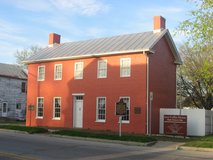
19th century house
Throughout Noah's life, housing was changing and evolving as Americans were pushing toward a distinct identity. Since settlers came from Germany, France, Spain, and England, housing was dictated by wealth and varied architecturally—but framed timber or rock was generally used. For Noah's friends and family, beds were made individually with no standard size and held mattresses stuffed with either straw or feathers. To heat the house, a chimney was placed in the middle of the home, doubling as a stove.
Typical houses had two rooms, but some families could afford two-story homes (with separate bedrooms for parents and children) or even stately manors on par with some of the nicer homes in Europe. Families generally had tables where they would sit to eat their meals. Most furniture was custom-made, but later in the 1800s, it became easier to purchase affordable, mass-produced goods with which to furnish a home.
Son William born, 1849
On 25 April 1849, Noah's son, William, was born when Noah was 29 years old. The family was living in Pigeon, Pottawattamie, Iowa, United States at the time.
Iowa, 1849
Many immigrants came to Iowa in the early 1800s in search of religious and economic freedom. This immigration increase caused a boom that increased Iowa's population from practically zero in 1800 to more than 420,000 by 1850. Iowa's flat terrain and fertile lands allowed agriculture to thrive and stand as a staple of the economy. Communities like Noah's in Iowa during this time mainly consisted of farmers, ranchers, and railroad workers.
Living in Utah, 1850
In 1850, Noah was living in Utah, Utah, United States.
Utah, 1850
During the 1800s, many Americans and European immigrants crossed the Oregon Trail to enjoy the religious and economic freedoms that a largely unsettled Utah provided. Some of Noah's friends and neighbors arrived with the region's Mormon settlers on the cross-country handcart and wagon excursions to escape religious persecution in the East. Others simply sought their fortune in a land rich with resources, as Utah's mountains and rivers made it a great location for both agriculture and mining. Because of all these factors, the overall population of Utah grew from just over 10,000 settlers in 1850 to more than 250,000 by the beginning of the 1900s.
Fugitive Slave Act, 1850
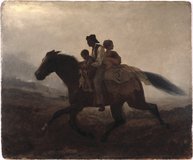
Fugitive slaves
By 1850, when Noah was 30, the rise of the Northern abolitionist cause in American politics had some leaders in the South calling for secession from the Union. In an attempt to ease these tensions and maintain Southern loyalty, Congress passed the Compromise of 1850, which included an update to the country's existing "Fugitive Slave Act." The new laws reduced the rights of runaway slaves, offering rewards for their return and requiring citizens to assist in their capture. While some slave owners were pleased with the compromise, abolitionists and many politicians in the North were outraged. Rather than easing North/South tensions, the risk of a division in the Union looked more and more like an inevitability.
Underground Railroad, 1850
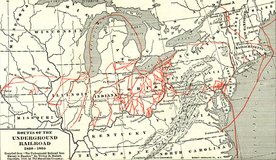
Some Underground Railroad routes
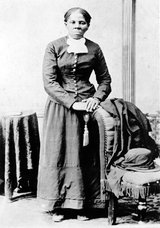
Harriet Tubman, an Underground Railroad leader
When Noah was in his 30s, the Underground Railroad was working at full force to secretly transport escaped Southern slaves into free Northern states. Vigilance committees in larger cities like New York, Philadelphia, and Boston were also forming to help provide food and supplies to these newly free men and women. By 1850, it is estimated that around 100,000 slaves had escaped using the Underground Railroad's network of travel routes and shelters. Supporters of the railroad saw it as a great cause for justice and morality, but many plantation owners—viewing slaves as property—considered the network a form of organized thievery.
Utah becomes a territory, 1850
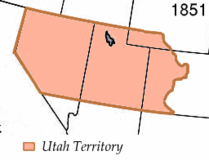
Utah Territory
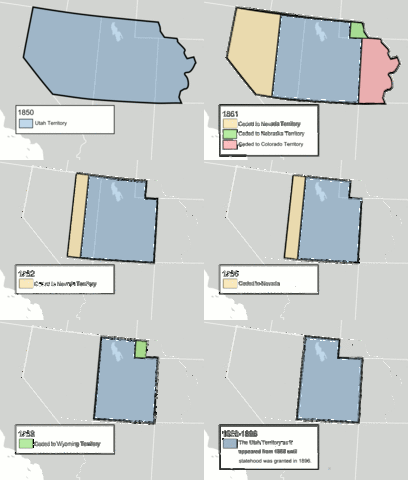
Utah Territory
In 1847, Mormon pioneers arrived in what they called "Zion" and what would soon be known as the Utah Territory. When Noah was 30, an 1850 act of Congress re-designated Utah and New Mexico as U.S. territories and California as a state. Partially as a result of their petitions to congress, early Mormons now lived in an official territory, which encompassed parts of nine current U.S. states. Shortly thereafter, Brigham Young was elected as the territory's first governor.
Deseret News, 1850
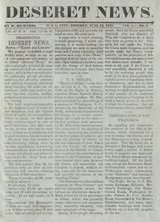
One of the first copies of the Deseret News
On June 15, 1850, just a few short years after the Mormon pioneers arrived in the Salt Lake Valley, the first issue of the Deseret News was published when Noah was a 30 year old. The Deseret News derived its title from the word for "honeybee" found in the Book of Mormon, and was the Church's preferred name for the territory. The publication strove to focused on "Truth and Liberty" by publishing local and national news issues along with sermons and church news. Because of its fairly low cost of $2.50 for six months, many around Noah were able to read the newspaper and keep up to date with what was happening around Utah and the country.
Transportation
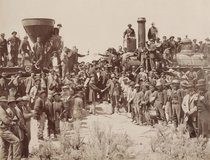
The transcontinental railroad meeting in Promontory, Utah
For those living in Utah, transportation relied heavily on animals such as horses, mules, and oxen, any of which could drag wagons, especially for the many pioneers trekking across the plains. Otherwise, most people in Noah's region simply traveled by foot. While bicycles became a national craze toward the end of the 1800s, they were much harder to come by in the wide open spaces of the West. The same could be said about the development of the internal combustion engine and early automobiles, as cars were rarely seen in this part of the country until later into the 20th century.
Train travel, however, was an innovation that reached Utah in a big way. It became a crucial part of transportation starting with the completion of the transcontinental railroad into the region in 1869. More railways expanded throughout the state, making travel easier and also providing access to the growing industry in the mines.
William Drummond, 1851
In 1851, when Noah was 31, William W. Drummond was appointed as a judge in Utah. Controversy erupted soon after, as Drummond frequently invited a prostitute known as “Skinny Ada” to sit with him on the stand. He created more unrest by spreading rumors about Brigham Young and other Mormons in the state, including extreme accusations of murder and treason. Drummond was eventually forced to resign and left town, much to the relief of many in Noah's community.
Daughter Clarissa born, 1851
On 29 August 1851, Noah's daughter, Clarissa, was born when Noah was 32 years old. The family was living in American Fork, Utah, Utah Territory, United States at the time.
Uncle Tom's Cabin, 1852
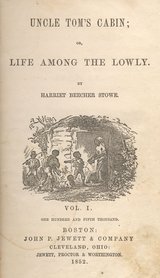
The cover of an early pressing of Uncle Tom's Cabin
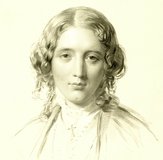
Portrait of Harriet Beecher Stowe by Franic Holl
On the 20th of March, 1852, the novel Uncle Tom's Cabin was released to the world, and quickly caused a firestorm of of controversy. The book was written by Harriet Beecher Stowe, who came from an established New England family, and was inspired by her meeting with an escaped slave while living in Cincinnati, as well as her own disgust at the strengthening of America's fugitive slave laws. The book became immensely popular in the northern states, where it was credited with changing the popular conception of slavery and greatly swelling the ranks of the abolitionist movement. Meanwhile, in the South, the book was met with loathing and denounced as an irresponsible exaggeration. The work catapulted Stowe into the ranks of the highest literary figures of the English-speaking world and would have caused a great deal of controversy and discussion in Noah's community.
Son Noah born, 1853
On 18 April 1853, Noah's son, Noah, was born when Noah was 33 years old. The family was living in Springville, Utah, Utah, United States at the time.
Communication
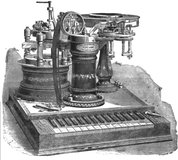
Electric telegraph from around 1880
New communication technology promised to put Noah in contact with his loved ones more rapidly than ever before. The arrival of the transcontinental railroad in 1869 brought letters and packages chugging into Utah. Travelers also carried news from across the country and around the world. The state's first telegraph office opened in 1861, linking Salt Lake to the east. Over the next few years, more than 600 miles of telegraph line opened, making communication across the states a lot easier. Telegraphs used electrical current pulses to transfer codes sent out by operators to other telegraph stations, which were then deciphered by the operator into messages called telegrams. Morse code was commonly used in the early days, but new systems like the printing telegraph made it possible for the telegraph operator to type complete messages directly to a recipient many miles away. The initial cost to send a telegram from Salt Lake to New York was $7.50 for ten words, but by 1880, the cost of the same telegram was only $1.50.
While these new inventions were changing how Noah received information, the good old fashioned printed word still remained vital to his community. Newspapers such as the Deseret News and the Salt Lake Tribune, carried daily news, as well as debates about and within the Latter Day Saints church. People could also type their own letters on rapidly advancing typewriter machines. The invention of the telephone promised yet another major revolution ahead, but for much of Noah's early life, this technology had yet to become widely available out West.
Father dies, 1855
Noah's father Thomas Guymon passed away in Springville, Utah, Utah, United States at the age of 68. Noah was 36.
Son Moroni born, 1856
On 30 July 1856, Noah's son, Moroni, was born when Noah was 37 years old. The family was living in Springville, Utah, Utah, United States at the time.
Moroni Guymon dies, 1856
Noah's child Moroni Guymon passed away in Springville, Utah, Utah, United States at the age of 0. Noah was 37.
Panic of 1857, 1857
When Noah was 37, the entire U.S. and much of the world was rocked by the Panic of 1857—a devastating economic recession that put thousands out of work. The great boom of the railroad industry and gold rush in the 1800s led to this inevitable bust, as mines dried up and overstretched railroad companies collapsed—costing investors millions and preventing farmers from shipping their goods back east. Within one year alone, more than 5,000 American businesses folded, as rising unemployment took its toll on many of Noah's friends and family.
Daughter Harriet born, 1857
On 11 November 1857, Noah's daughter, Harriet, was born when Noah was 38 years old. The family was living in Springville, Utah, Utah, United States at the time.
Alfred Cumming, 1858
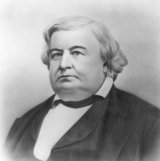
Alfred Cumming
In 1858, when Noah was a 38 year old, Alfred Cumming took over the position of governor from Mormon prophet Brigham Young. He served as the first non-Mormon governor of Noah's state until 1861 when he returned to Washington D.C. His appointment as governor showed the significant impact that non-Mormons were beginning to have in the state.
Camp Floyd, 1858 - 1861
In 1858, when Noah was 38, President James Buchanan sent a group of soldiers to establish a military camp in Utah to dispel any threat of a Mormon uprising after rumors of a Utah rebellion reached the White House. Camp Floyd was established near Utah Lake and was home to nearly 7,000 soldiers and civilians, quickly becoming the third most populous city in the Utah Territory. The rapid influx of goods, money, and people boosted Utah's economy significantly. In 1861, however, the Camp was deserted as the soldiers left for the Civil War. The buildings were soon demolished, and Utahans around Noah took advantage of the opportunity to buy cheap surplus supplies left behind by the soldiers.
Daughter Amy born, 1859
On 18 January 1859, Noah's daughter, Amy, was born when Noah was 39 years old. The family was living in Springville, Utah, Utah Territory, United States at the time.
Politics
The events leading up to and including the Civil War saw America in its highest state of political unrest. A country that had already been polarized over issues like slavery and religion now was moving toward a distinct two-party system in government and—for a time, at least—two separate governments, entirely. For Noah and his friends and family, it was virtually impossible not to pick sides. This included women, who were now taking a more active role in political issues—particularly as the war and western expansion put many women in the role of feeding and defending their families. Of course, voting was still limited almost exclusively to white male land owners, as women, African-Americans, and other minority groups fought to have their voices heard.
Pony Express, 1860
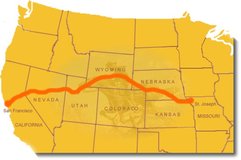
Pony Express route
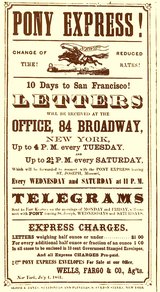
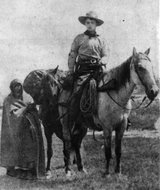
When Noah was 40, people across the country were abuzz about the implementation of the Pony Express, which revolutionized the exchange of information throughout the western United States. Instead of a haphazard system using unrecorded horses, the Postal Service established relay stations throughout the West that provided a place for riders to sleep and switch to fresh horses. Though this system drastically improved the speed at which Noah and his friends received mail and information, it was proved obsolete in 1864 when the transcontinental telegraph allowed for instant transfer of information.
Mining, 1860
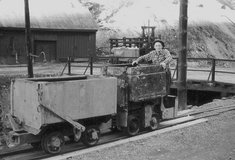
A miner in Utah
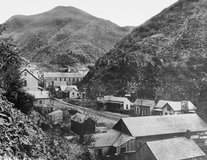
Bingham Mine

Bingham Mine
While mining has generated billions of dollars for Utahans throughout the state's history, in its early years as a new territory, Brigham Young, Utah's first governor and Mormon prophet, discouraged it. In the 1860s, however, Patrick Connor, a Civil War colonel who was stationed in Utah, saw its mining potential. In a matter of a few years, thousands of mining claims were filed and big mines, such as the Bingham and Emma Mines, were established. These mines brought a flood of people into Utah and significant wealth to many of Noah's friends and neighbors.
Civil War, 1861 - 1865
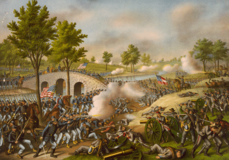
Battle of Antietam
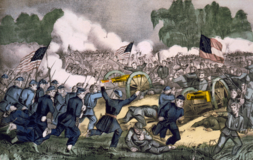
Battle of Gettysburg
When Noah was 41 years old, the United States began one of the bloodiest wars in its history—the Civil War, which took the lives of over 600,000 Americans. Noah saw families in his community divide as brothers fought against brothers for what they believed was right. Wives and mothers converted houses into hospitals and worked as nurses to aid the dying soldiers, while men fought for their families and loved ones. Meat was scarce and shoes were impossible to buy at any price. Food costs skyrocketed during this time, limiting citizen's abilities to buy food and provide for their families. In 1860 a meal for an average family cost $6.55; three short years later in 1863 the same food cost $62.85.
Salt Lake Theater, 1861
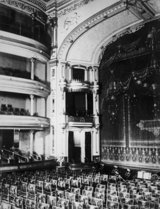
Interior of the Salt Lake Theater
Built in 1861, when Noah was a 41 year old, the Salt Lake Theater became one of Utah's most popular destinations for the latest in live entertainment. The impressive venue had a capacity of over 1,500, and spectators would travel from throughout Utah and all over the Southwest to see first rate plays, gospel teachings, and—much later into its existence—silent films. The Salt Lake Theater would stand for over 60 years before it was razed in the 1920s.
Daughter Elizabeth born, 1861
On 8 January 1861, Noah's daughter, Elizabeth, was born when Noah was 41 years old. The family was living in Springville, Utah, Utah, United States at the time.
Homestead Act, 1862

A homestead on the American frontier
When Noah was 42 years old, many Americans were excited to learn about the Homestead Act. This act allowed citizens to claim up to 160 acres of free land in the West, inspiring many people to pack their belongings and head for the frontier with the hopes of establishing a successful farm and a new life. In order to keep the land they wanted, homesteaders had to "prove their claim," which meant they needed to make improvements, build a house, and farm the land for five years. Not everyone was able to take advantage of this opportunity, however, as many people did not have the financial means to travel west, run a farm, or build a house. Additionally, the land that homesteaders were given often came from Native Americans, who were forced to give up their land and move to reservations across the West.
Morrill Anti-Bigamy Act, 1862
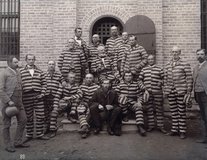
A group of prisoners arrested under the Edmunds Act
Ever since its introduction, the practice of polygamy by Mormons had caused significant controversy both in and out of the Church. In 1862, the federal government took action to curtail the practice by passing the Morrill Anti-Bigamy act. This act — which specifically targeted the Mormons — was the first of several anti-polygamy laws passed in the 19th century. It was later reinforced by the Edmunds Act in 1882, and the Edmunds-Tucker Act in 1887. The Morrill Anti-Bigamy Act officially made it illegal to practice polygamy in the United States and also reduced the amount of land the Church could own. Although it would be several years before a significant number of Mormons were successfully prosecuted under this act, many of those around Noah were concerned at the potential consequences of this legislation, and worried the day might come where they would be forced to choose between their religious practices and the laws of the land.
Emancipation Proclamation, 1863
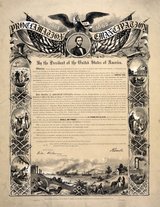
The 1863 Emancipation Proclamation
For years, newspapers in Noah's community had been consumed with the national debate over the issue of slavery. The South fought tooth and nail against the North's attempts to curtail their rights to own and profit from slaves. For every free state that entered the United States, the South wanted another pro-slavery state added.
At first, President Lincoln tried to balance these competing interests. But as the Civil War erupted, his Republican party quickly realized that the only way to win a war with the slave-holding South was to make it a war on slavery. In 1863, when Noah was 43, Lincoln's Emancipation Proclamation legally ended slavery in slave-holding states. African-Americans rejoiced, and some simply left their plantations to join the Union Army. Others stayed in their towns and plantations, hoping to receive wages for their labor. Still others headed north with their belongings loaded on carts, singing hymns on their way to a new life.
While Northerners in general did not view African Americans as equals, Lincoln's proclamation found support in most Northern communities. Despite its outrage, the South was largely powerless to stop the exodus of former slaves, as the able-bodied white men were off fighting with the Confederate Army.
Commerce
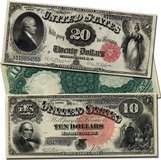
Paper bills from the 1880s
Towns and cities were being established across the United States during the 1800s, and as the population grew many people around Noah stopped practicing subsistence farming and worked in other jobs, such as blacksmithing or tanning. Bartering was still common during Noah's life, as many of the local farmers would use their crops to barter for goods. Technology was also improving, so it was possible to farm more land with fewer people.
Around the beginning of the century, the United States began to print its own money in order to solve the problem of foreign currency circulating in the economy. Noah and his neighbors began to use U.S. dollars instead of British shillings and pence.
Department stores began to appear in the larger U.S. cities across the United States in the latter half of the century. This allowed people like Noah's friends and family to purchase goods at set prices rather than through the barter system, where the price could vary from person to person.
Lincoln Assassination, 1865
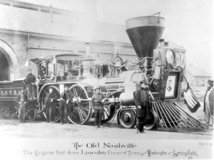
The train from Lincoln's funeral procession

Ford's Theater, where President Lincoln was assassinated
On April 15, 1865, when Noah was 45, President Abraham Lincoln was assassinated by John Wilkes Booth while attending a play at Ford's Theatre. The Civil War had officially ended just five days earlier, and a furious and vengeful Booth supported the defeated Confederacy. Americans like Noah learned about the President's death quickly as flags were at half-staff and businesses were closed by the next day. Millions of Noah's fellow countrymen attended open-casket viewings as a train carried Lincoln's body on a winding journey from Washington DC to Illinois, passing through Pennsylvania, New York, Ohio, and several other states. The end of the bloody and destructive war, which had been a time of rejoicing for many Americans, had now become a time to mourn.
13th Amendment, 1865
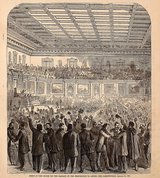
Celebration erupts after the amendment is passed
After the Civil War ended in 1865, when Noah was 46, the 13th Amendment was passed, freeing all slaves within the United States. Black citizens and some white Americans celebrated across the United States, but they also knew and felt racist sentiments that had grown through decades of slavery and oppression. Shortly after their readmission to the Union, many Southern states began to pass "Black Codes" to restrict the freedoms of former slaves. Many new laws included provisions stating that black men must have written documentation of employment, while others sought to restrict African Americans from holding any profession except farm laborer. As a result, many former slaves worked as sharecroppers on land owned by wealthy farmers and paid part of their crop as rent. Unfortunately, the poverty and poor living conditions most sharecroppers endured were not much different from what they had experienced as slaves.
First Transatlantic Cable, 1866
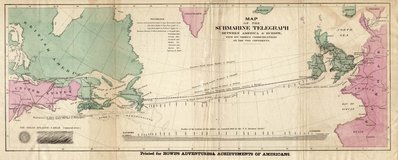
Map of the transatlantic cable
In 1866, when Noah was 46, a permanent telegraph line was laid across the Atlantic Ocean by the British ship, Great Eastern. This was eight years after the creation and eventual failure of the first attempt at a transatlantic cable. This new line was able to re-establish communication between England and North America and sustain it—enabling messages to be delivered long distance in a matter of minutes rather than days by steamship.
Typewriter, 1867
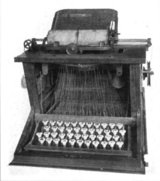
An early Sholes's typewriter
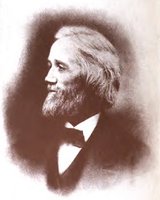
Christipher Latham Sholes
Noah was 47 when Christopher Latham Sholes introduced his prototype for the modern typewriter. Sholes's invention improved on prototypes that had already been introduced. He helped solve the jamming problem of previous models and introduced the "QWERTY keyboard." However, the improved invention was not immediately successful. Sholes sold the rights to E. Remington & Sons, and the money from the sale would be the only profits he would ever see. But as time went on, more and more journalists, clerks, and company officials found typing faster than writing by hand—and the device eliminated misunderstandings caused by bad penmanship.
These early typewriters were very close to the standard design that would emerge in later years, but with a few noticeable differences. The early models were based on the 'up strike' method: the paper would be affixed to a cylindrical roller, and the letters would strike upward against the paper. However, with these designs, typists were unable to see the words being printed as they typed them. Early typewriters also only printed in uppercase letters—the 'shift' key would not be introduced until 1878. Despite these issues, Sholes's typewriter was beginning to revolutionize business and communication in Noah's community. By the early 20th century, his invention could be found in most businesses and many homes.
ZCMI Established, 1868
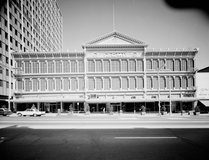
ZCMI building
In 1869, when Noah was a 48 year old, the Zion's Cooperative Mercantile Institution was established as one of America's first department stores. With the coming of the railroad, Utah began seeing an influx of outsiders, which many Mormons around Noah saw as a threat to their prosperity as a religious group. As more and more non-Mormons entered the territory, many sold products to Mormons at exorbitant prices. Because of this, Brigham Young encouraged Mormon business owners to gather under one roof and sell goods to each other. Under this business model, Mormons around Noah were able to purchase cheap goods.
Transcontinental Railroad, 1869
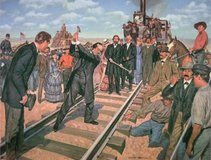
Finishing the railroad
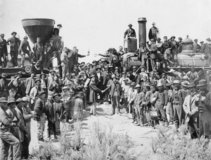
Promontory Summit
Beginning in 1862, the Pacific Railroad Act granted land and bonds to railroad companies based on how many miles of track they laid. Because of this, the Central Pacific and Union Pacific railroad companies battled the elements and terrain in order to lay as much track as possible, as fast as they could. Exhausted workers finally drove the "Last Spike" at Promontory Summit in 1869, connecting the East to the West in ceremonious fashion. Many Utahans like 49 year-old Noah benefited from this, including the Mormons who were now able to quickly bring in goods and supplies to finish building the Salt Lake Temple.
Heinz Ketchup, 1869
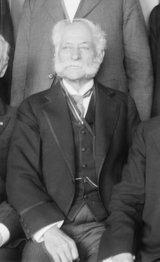
Henry Heinz
When Noah was 49, the Heinz company, founded by Henry Heinz, began producing what would become one of America's favorite condiments—ketchup. With its distinctive keystone-shaped glass bottle, Heinz Ketchup was one of America's first packaged foods available to Noah. The popularity of Heinz ketchup caused a surge in pre-packaged foods in America.
Elizabeth Ann Guymon dies, 1869
Noah's child Elizabeth Ann Guymon passed away in Springville, Utah, Utah, United States at the age of 8. Noah was 49.
Sister Barzilla dies, 1869
Noah's sister Barzilla Guymon passed away in Fountain Green, Sanpete, Utah Territory, United States at the age of 45. Noah was 50.
Liberal Party, 1870
The Liberal Party was formed in Utah in 1870 when Noah was 50 years old. It was established largely to counter Mormon dominance of state politics, and was rooted in an opposition to religious influences in government. While the party's numbers were relatively small, they still won several local elections before disbanding in 1893. Many non-Mormons in Utah joined the Liberal Party, but with the majority of the state's population belonging to the Church, the Mormon vote still guided the direction of Utah politics.
Salt Lake Tribune, 1871
On January 1, 1870, when Noah was 51 years old, William Godbe and several others started the Salt Lake Tribute in response to the Deseret News urging church members to boycott the Utah Magazine. The establishment of the Salt Lake Tribune was a movement to oppose the political and economic policies of the Mormon church. While Mormons around Noah weren't excited about the prospect of an anti-Mormon newspaper in their cities, many non-Mormons in Utah appreciated the diversity that the Salt Lake Tribune offered.
Mother dies, 1872
Noah's mother Sarah Gordon passed away in Fountain Green, Sanpete, Utah Territory, United States at the age of 81. Noah was 53.
Blue Jeans, 1873
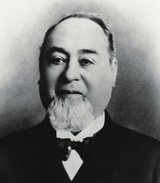
Levi Strauss
In 1873, when Noah was 53, a German immigrant named Levi Strauss patented denim pants, which would later be known as jeans. Blue jeans, which Strauss had actually invented years earlier, soon became commonly worn by miners and farmers in Noah's country. Eventually, blue jeans revolutionized the world of fashion, becoming a staple in many closets in the U.S. and around the world.
The Long Depression, 1873 - 1878
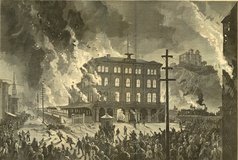
Burning of the Union Depot at Pittsburg during the Great Railroad Strike of 1877
When Noah was 53 years old, one of the worst financial crises in the history of the United States struck the nation. This has gone down in history as the "Long Depression" and, in many ways, it was a worse disaster than the Great Depression of the 1930s.
For years, banks, businesses and private citizens had invested heavily in the building of railroads, expecting an easy profit; unfortunately, many of the new railroad lines did not generate enough funds to maintain them. The bubble finally burst in 1873 and caused many large banks across America to collapse. Many people in the nation lost their life savings in the process, and businesses had difficulty securing the funds needed to continue operations. As the crisis worsened, there was a downturn in many industries that helped supply the railroads, such as the steel industry, and factories began closing their doors.
Many members of Noah's community would have been affected by the economic downturn. Those working in industrial cities found themselves part of the growing mass of the unemployed, while rural farmers suddenly found the banks trying to collect their debts and being unable to pay. Many workers began to wander the countryside, searching for work wherever it could be found, while the employed faced slashed wages as companies sought to save money.
As a result, many workers turned towards the unions to help protect them. Meanwhile, farmers joined the Grange, a farmers' union that sought to pressure government to pass laws to protect them. A series of strikes began to occur across the nation, many of them protesting the lowering of wages and unsafe working conditions. These strikes were often met with violence, as state governors called out the state militias to suppress the workers. Armories were built in many major American cities, enabling the government to quickly stamp out any workers' insurrections. This further undermined people's trust in leaders who seemed to support the wealthy over everyday Americans, and the People's Party and other reform movements began to gain traction across the nation, vowing to root out corruption and make the government more responsive to the people's will. Others began to turn to more radical political movements, such as socialism and anarchism, which seemed better suited to explain and rectify the ills of the day.
The Long Depression would last until 1878, but the economy remained shaky, and another downturn would occur in the early 1890s. Throughout this time, nearly every member of Noah's community would have felt the impact of this catastrophic event.
Telephone, 1876
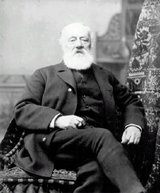
Antonio Meucci, the true inventor of the telephone
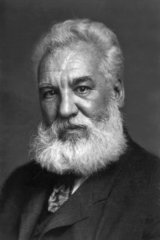
Alexander Graham Bell
When Noah was 56, Americans and people around the world were excited by the emergence of an incredible new communication technology: the telephone. Sixteen years earlier, in 1860, Antonio Meucci - a highly educated Italian immigrant - demonstrated the "teletrofono" voice communication device in New York. Meucci had created the system to help care for his wife, who was paralyzed and bed-bound. Years later, Scottish-born, Boston-based inventor Alexander Graham Bell allegedly utilized Meucci's plans and materials (they shared a laboratory) and patented what was widely reported in newspapers as the first functioning telephone. He showcased his device for the first by calling his assistant and announcing the famous line, "Mr. Watson, come here, I want to see you."
Meucci sued Bell over the patent, but died before the court heard the case. Bell's claim to the telephone soon came under fire from another inventor named Elisha Gray. On February 11, 1876, Gray had filed a patent for a device that could transmit musical tones, but not speech. Later that same day, Bell filed the patent for his proposed telephone. A well publicized lawsuit followed, but in the end Bell was victorious. He went on to make a fortune from the telephone and was regarded by most people in Noah's time as its rightful inventor. The Bell Telephone Company also became one of the giants in the new telecommunications industry. It wasn't until more than 100 years later, in 2002, that the United States Congress officially recognized Antonio Meucci as the actual inventor of the telephone.
Sister Elizabeth dies, 1876
Noah's sister Elizabeth Guymon passed away at the age of 50. Noah was 57.
Living in Fountain Green, 1880
In 1880, Noah was living in Fountain Green, Sanpete, Utah, United States.
Time Zones, 1883
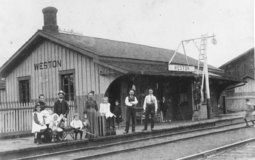
Time zones helped prevent excessive waiting at train stations
When Noah was 63, time zones were introduced in the US for the first time. Before 1883, most local communities rendered time based on "high noon," when the sun was at its highest point. As railroads led to faster travel and commerce between distant communities, the lack of a standardized time zone caused confusion and chaos with regards to times of arrival and departures at train stations. Railroad companies created time zones in 1883 to make travel and commerce easier and more organized for people around Noah. This change was well-received and very successful, and within a year, international time zones were established, improving navigation around the world.
Bear Lake Earthquake, 1884
Many people across Utah were woken up in the middle of the night when an earthquake struck at 1:50 a.m. on November 10th, 1884, when Noah was 65. "Did you feel the earthquake?" was a common question in conversations between friends and neighbors in the aftermath. Although the damage was minimal, many witnessed the shaking of windows and furniture, while also worrying about the possibility of more dangerous aftershocks.
Brother William dies, 1886
Noah's brother William Guymon passed away in Breckenridge, Hancock, Illinois, United States at the age of 71. Noah was 66.
Manifesto of 1890, 1890
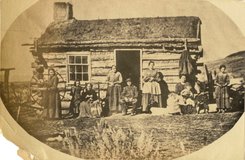
A polygamous family in Utah around the time of the Manifesto
When Noah was 70, Mormon prophet Wilford Woodruff issued the Manifesto of 1890, banning the practice of polygamy within the Church. This major announcement shook Noah's community deeply, as many of his neighbors were currently engaging in the practice. President Woodruff issued the manifesto for the "temporal salvation of the Church," since the U.S. government had threatened to seize Church temples and land if it continued to allow polygamy. As a result of the Manifesto, Church members were asked to stop forming new plural marriages, but the majority of plural marriages already in place continued to exist.
The Manifesto helped ease tensions between the U.S. government and the Mormons in the Utah Territory, opening the door to Utah statehood. Many of Noah's neighbors strongly supported the Manifesto, recognizing both moral and political benefits to the change. However, some local Mormons were disappointed by the ruling, believing that the Church was sacrificing its doctrine for political gain. Several high-ranking Church leaders continued to practice polygamy in secret, both within Utah and in Mormon colonies in Mexico and Canada. A second Manifesto would be issued 14 years later to reinforce the Church's stance against plural marriage.
Professional Football, 1892
In 1892, when Noah was 72, the first professional American football game was played. Purely an amateur sport up to this point, the game between the Allegheny Athletic Association and the Pittsburgh Athletic Club saw the two clubs reach out to top college players to join their teams for a Columbus Day match-up. William "Pudge" Heffelfinger, a star at Yale, was paid $500 to travel to Pittsburgh and play for the Allegheny squad—making him the first known football player to be paid in the U.S. By the early 20th century, the first professional leagues would form, and American football would soon become one of the most popular sports in the country.
Salt Lake Temple, 1893
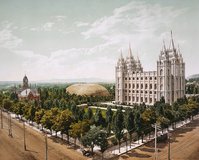
The completed Salt Lake Temple in 1899
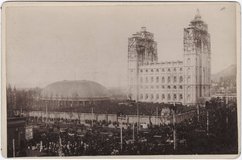
The Salt Lake Temple under construction
After forty years of construction, the Salt Lake Temple was dedicated on April 6th, 1893, when Noah was 73. Stone was carried twenty miles by oxen and then by train from the Little Cottonwood Canyon in order to construct the fortress-like temple. Church members from throughout the region volunteered their time, money, and skills to the project, taking time away from their farms or businesses to contribute to what they felt was an important cause. The laying of the temple's capstone exactly a year before the dedication of the temple was an enormous event for the entire community, and over 50,000 people gathered to see the statue of the Angel Moroni placed on top of the temple. Noah's Mormon neighbors in the Salt Lake Valley were overjoyed to finally have a temple nearby, and many Mormons across the world saw the temple as a beautiful symbol of their faith.
Women's Suffrage, 1895
In 1870, the battle for women's suffrage in Utah ended with a win for women across the state, but it wasn't long lasting. By 1887, women's right to vote was revoked by Congress in an attempt to rid the territory of polygamy. It wasn't until 1895 when it was once again granted and written into the state constitution. With their right to vote finally secured on some level, Utah women around Noah voted often in local and state elections.
Plessy v. Ferguson, 1896
Noah was 76 when the case of Plessy v. Ferguson was heard before the United States Supreme Court. Addressing the discrimination still faced by African-Americans in a post-slavery America, the Court's eventual ruling established the precedent of "separate but equal." This upheld the legality of having separate, segregated facilities and institutions for whites and blacks, be it water fountains or school systems. Plessy's defeat led to increased discussion over civil rights in America, but blacks would still face the obstacles of legal segregation for decades to come.
Utah Statehood, 1896
Noah was 76 when Utah finally transitioned from a longstanding territory into a state in 1896. After years of political conflicts with the U.S. government, the dominant Mormon population in Utah had embraced new Church guidelines that outlawed polygamy and other practices that had stirred much of the controversy preventing statehood. Now, Utah was officially part of the Union—the 45th state—completing a long journey towards acceptance by the rest of the nation.
Brother John dies, 1896
Noah's brother John Guymon passed away in Vermilion, Edgar, Illinois, United States at the age of 84. Noah was 77.
Marconi Invents Radio, 1897
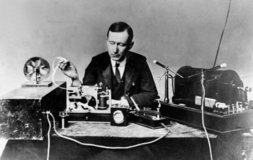
Marconi demonstrating the radio
Following in the tradition of dozens of Italian scientists and inventors, Guglielmo Marconi began studying at the Livorno Technical Institute in 1894. Focusing his efforts on understanding radio waves, he had patented a basic system of wireless telegraphy—the radio—by 1897. Marconi's first radio waves were initially short, averaging only a mile and a half long. But in 1901, he was able to receive a wireless transmission from across the Atlantic, and kept refining his technology until he could transmit from Nova Scotia to Ireland. He received the Nobel Prize in physics in 1909. In 1912, the Titanic famously signaled for help using Marconi's invention.
Even after his initial successes, Marconi continued to study and develop his science, assisting in the creation of the British Broadcasting Company (BBC) and the development of radar technology. But Marconi would remain most well-known for inventing the radio, bringing increased enjoyment, safety, and information to Noah's neighbors and relatives. Many members of Noah's community soon could not imagine their lives without the existence of radio.
Spanish American War, 1898
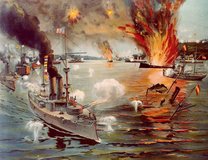
A battle of the Spanish-American War
During Noah's lifetime, the United States began to establish itself as a world power, and began to intervene in international affairs in places like the Philippines, Hawaii, and Cuba. Unfortunately for U.S. foreign relations, this caused a lot of tension, resulting in several conflicts including the Spanish-American War of 1898. Americans around Noah were shocked to read the sensational news articles detailing the alleged Spanish attack on the U.S.S. Maine in Cuba. Although only a few thousand Americans died in the war, the U.S. established itself as a major player on the world stage. Many people around Noah learned about the war through "yellow journalism," or newspaper articles that contained exaggerated information to promote the war and sell copies.
Brother Isaiah dies, 1901
Noah's brother Isaiah Guymon passed away in Edgar, Edgar, Illinois, United States at the age of 91. Noah was 81.
Wright Brothers, 1903
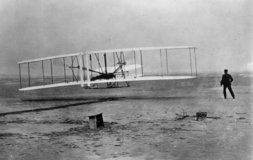
When Noah was 83 years old, brothers Orville and Wilbur Wright successfully designed and flew the world's first heavier-than-air, human-piloted aircraft. That initial flight in Kitty Hawk, North Carolina, lasted less than a minute and didn't actually gain much public attention. By 1905, though, Noah's local newspaper would follow the Wright Brothers closely as their increasingly sustained flights became a national sensation. Within a few short decades, the modern airplane would completely revolutionize travel for people all over the world.
Ford Motors, 1903
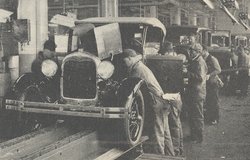
Ford Motor Company
In June of 1903, when Noah was 83, Henry Ford changed transportation forever by founding the Ford Motor Company in Dearborn, Michigan. In its early years, the company revolutionized manufacturing with its improved version of the assembly line, which had been patented by Ransom Olds of the Oldsmobile company a few years prior. Ford's version of the assembly line used an innovative conveyor system, in which the chassis of the car were towed by a rope from station to station, making production quicker and more efficient. Ford also set a precedent by providing a decent wage for his workers—$5 for a 9-hour day. The introduction of the Model T a few years later allowed millions of middle-class Americans to affordable automobiles.
First Radio Broadcast, 1906
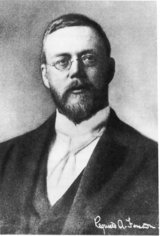
Reginald Fessenden
On Christmas Eve of 1906, the Canadian inventor Reginald Fessenden successfully executed the first radio broadcast—a Christmas concert sent out from a radio tower in Massachusetts to crews aboard United Fruit Company ships in the Atlantic Ocean. This was a major milestone in communication, and made news around the world. Soon, people like 86 year-old Noah would be able to enjoy this new technology for communication, news, and entertainment.
Civic Improvement League, 1907
Founded in March 1906 when Noah was 87, a group of like-minded Utah citizens formed the Civic Improvement League in an attempt to prove that Mormons, Catholics, Protestants, and Jews could work together on social, cultural and environmental matters. This league tore down old, rundown buildings, built new buildings, and cleaned up the streets by picking up trash, laying pavement, and installing lights. Many of the Utahans around Noah were pleased to see that their hometowns were being improved and beautified.
Wife Elizabeth dies, 1908
When Noah was 88, his wife Elizabeth Ann Jones passed away in Orangeville, Emery, Utah, United States at the age of 78.
Utah, 1908
Located in the Rocky Mountain region, Utah was home to some of the highest mountain peaks and most spectacular views in the United States. During Noah's lifetime, a high percentage of Utahns were practicing Mormons—members of the Church of Jesus Christ of Latter-day Saints. This impacted many of the practices and politics in Noah's community. Between 1900 and 1950, a strong mining industry and the expansion of the LDS Church helped the state's population double in size from 300,000 to more than 600,000.
Enlarged Homestead Act, 1909
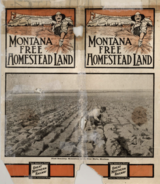
Advertising for the Homestead Act
The Enlarged Homestead Act of 1909 promoted western migration to Noah's region by increasing the maximum permissible homestead to 320 acres of non-irrigable land in dry land areas. This was attractive to those who wanted to try their hand at dry land farming, which had recently become popular as technology improved the harvests.
To take advantage of the new act, land owners were required to have five years of continuous residence on their property. They also had to be U.S. citizens, or in the process of earning their citizenship.
While homesteading on dry land still presented challenges, the convenience of new rail lines and the emergence of new towns in the Northwest made it easier to sell crops far and wide. Unfortunately, a shortage of proper investigators also made it easy for some homesteaders to make false claims and grab more land unlawfully.
Noah dies, 1911
Noah died when he was 91 years old in Orangeville, Emery, Utah, United States.
Brother Noah dies, 1911
Noah's brother Noah Thomas Guymon passed away in Orangeville, Emery, Utah, United States at the age of 91. Noah was 91.
Reduce Time Line